

When does striving become self-protection?
The subtle armor of perfectionism


Hello Friends. Striving for excellence can be a slippery slope, right? We often praise ambition, discipline, and high standards—but rarely pause to ask when they stop serving us. In this post, I explore the hidden forces beneath perfectionism and how to tell the difference between healthy striving and self-protective overdrive. When does your striving shift from purposeful to pressured?

Last week in a perfectionism workshop, I asked a simple question to the group:
When does healthy striving tip into perfectionism for you?
The room went quiet.
Then someone said, “When I can’t stop.”
Another added, “When doing hard things is the only way I feel worthy.”
And just like that, we could all feel it — the tension between excellence and exhaustion — sitting in the center of the circle.
They were between the ages of 19 and 43. Different seasons of life. Different ambitions. The same sticky pattern.
One woman described how pushing herself to do intimidating things has fueled her success — graduate programs, leadership roles, bold career moves. But it has also left her burned out and anxious. Her achievements feel invigorating but rest feels unsafe.
Another spoke about the constant soundtrack of “shoulds” and “coulds.” The little arrows of suffering. The quiet pressure about the future. The sense that she is always behind. I might call this a mental state of “perfectionism noise.”
A college student shared that growing up, a grade of 95% prompted the question by a parent: “Why not 100?” (I can’t even tell you how many times I have heard this same story.) Now, even small mistakes feel emotionally painful.
“It’s like I’m walking on eggshells with my own decisions,” she said.
There was talk of a preference to hand in a “perfected” project late over completing a good-enough result on time. Pushing your odds to the last minute usually ends up costing more than a stellar grade.
I was once in their shoes.
Intellectually they understood that balance and self-care matters yet feeling unable to ease up. I guess that is why they showed up for a workshop on overcoming perfectionism.
I love these sensitive strivers. I really do. I just hope they can love themselves a little more by the end of the workshop series.
And here is when I begin to explain to them:
Perfectionism is not a personality flaw. It’s protection.

Perfectionism vs. Healthy Striving
In The Perfectionist’s Dilemma, I define perfectionism as:
The paradox created by the need for belonging — and fear of rejection — paired with unrealistic expectations for achievement and approval that sap your energy or life force.
Maybe it’s a mouthful. But at its core, perfectionism begins with a very human need — the need to belong. We are wired for connection, approval, and acceptance.
Alongside that need lives a fear: the fear of being rejected, judged, or found unworthy.
To protect ourselves from that fear, we develop unrealistic expectations — standards so high and rigid that they promise safety, acceptance, recognition but slowly drain our energy, joy, and vitality.
If I can just get it right.
If I can just achieve enough.
If I can just avoid mistakes.
This self-preservation pattern helped you succeed. It may have earned praise. It may have helped you feel in control. But over time, it can leave you exhausted, anxious, and disconnected from your own vitality. The negative effects of perfectionism accrue like bad debt. And the body takes the hits in one way or another.
Author and researcher Brené Brown writes:
“Perfectionism is not about healthy achievement and growth… It is the belief that if we live perfect, look perfect, and act perfect, we can minimize or avoid the pain of blame, judgment, and shame. It’s a shield… a 20-ton shield that we lug around thinking it will protect us, when in fact it’s the thing that’s really preventing us from taking flight.”
That image of a shield has stayed with me for years. Perfectionism is heavy and rigid. It is energized by a frantic fear of being rejected, humiliated, and making mistakes. It’s feeling unworthy of love or approval from the people who matter to you. Because that’s what happened at some time in the past.
Very well dear. Next time it will be an A+.
Healthy striving, on the other hand, is flexible and balanced. It is energized by purpose, curiosity, and growth. Mistakes are part of the learning. You trust the process and, most importantly, yourself.
The perfectionism–healthy striving spectrum is less about how high your standards and what you are willing to sacrifice to reach your goals and more about what emotion or unmet need is driving them. And you can be sure that blame, judgment and shame form a trifecta that powers a relentless inner critic. That perfectionistic part is frantically trying to stop those underground emotions from seeping through.
It has a positive, if misguided, intention.

Your “Tricky Brain” and the Three Zones
British psychologist Paul Gilbert, developer of Compassion Focused Therapy, describes three emotion regulation systems that developed over the course of evolution — and shape how we respond to life. Viewing these systems in the brain as “zones” makes it easier to understand:

The Threat System (Red Zone)
Your alarm bell.
It scans for danger — criticism, rejection, failure. It’s associated with the fight or flight, responses. This system mobilizes the body and mind for action and releases a cascade of neurochemicals and hormones (cortisol) to help with the body’s energy needs. While the upside is a quick reaction time when necessary, the downside is that it’s unsustainable over time.
Emotional states > anger, anxiety, disgust, fear, safety seeking, scarcity
Many perfectionists spend a lot of time in the Red Zone but you wouldn’t know it by looking at them.

The Drive System (Blue Zone)
Your achievement engine.
This system pushes you toward goals, recognition, and progress. It’s fueled by dopamine — the brain’s “go get it” chemistry. It’s engaged when you experience elevated emotions or states such as awe, compassion, excitement, joy, love, and pride. Its function is to pursue adaptive resources for living such as food, sexual partners, social affiliations, status, security, and wealth.
In healthy striving, this system feels purposeful and energizing. The downside is addictive tendencies, social comparison, workaholism and burnout.
Emotional states > thriving, excitement, vitality, achieving, striving
Perfectionists often ping-pong between Red and Blue — anxiety and overdoing.
The Soothe System (Green Zone)
Your restoration system.
This is the part of your nervous system that helps you settle, digest, and feel safe. It brings calm, connection, and care. It’s associated with the neurochemical oxytocin that induces states of love and belonging. It is a state we’d all like to be in more of the time—or know how to activate it when we get stressed. This state is similar to the social engagement system described in Stephen Porges’ polyvagal theory of nervous system regulation (see Arielle Schwartz’s excellent article) or heart coherence described by HeartMath Institute:
“a state of cooperative alignment between the heart, mind, emotions and physical systems.”
It is essential for bringing the Red and Blue Zones into harmony as both threat and excitement require recovery. The downside of the soothe system is an extreme state of complete shutdown, like numbing, fainting, or freezing. Yet, it generally serves as a rest and relaxation function.
Emotional states > contentment, calm, comfort, connection, flow, security
And for many high achievers, it’s a wholly underutilized system.
Don’t fret if you realize you are chronically in the Red or Blue Zones. It’s not that any zone is good or bad. You have a very human nervous system responding to your inner and outer worlds — as the body was designed. These emotional regulation systems seek balance. If you find yourself stuck in overdrive or stress reactivity or shut down, just know these are survival patterns your brain defaults to.
The work is learning how to shift toward regulation.
A Practice for the Moment You Notice
The RAIN reflection technique can be a salve for those times when you are caught under a spell of reactivity or negativity. Moments that can happen naturally whenever you feel overwhelmed or overly critical, or when you may be consumed with anxiety, fear or uncertainty. And surely when you may have found yourself straddling the Red-Blue zones.
Find a quiet place. Sit or stand in a way that allows you to be relaxed and alert, with the sense of a strong back and an open heart, with solid roots and flexible branches.
Take a few moments to scan through your recent experiences that may cause some kind of activation in your nervous system. There may be moments of tension or upset, exhaustion, being on autopilot, or a sense of helplessness. There may also be moments of inspiration and agency in the mix, too. It’s ok — mixed emotions are part of the human experience and it helps to tease them out.
Bring to mind any sensations, images, thoughts, or emotions that arise.
R — Recognize
What is happening right now?
Name the emotion. Notice which zone you’re in. Even naming it can soften it.
A — Allow
Let the experience be here. Instead of fighting it, give it a little space.
I — Investigate
With kind curiosity, ask:
How does this feel in my body?
What am I believing right now? Is it true? Is there another way to see it?
What does this part of me most need?
N — Nurture
From your wisest self, offer something kind — a soothing phrase, a slower breath, a supportive next step.
The women in the perfectionism workshop are not trying to be difficult or dramatic.
They are trying to belong. To matter. To feel safe.
Aren’t we all?
Healthy striving says: I want to grow.
Perfectionism says: I must not fail.
One expands you. The other contracts you.
This week, when you feel the pressure rise, pause and ask:
What zone am I in?
What am I protecting?
What would it mean to strive from wholeness rather than fear?
You don’t have to give up ambition.
Just the 20-ton shield.
Resources
Tara Brach, Radical Compassion: Learning to Love Yourself and Your World with the Practice of RAIN
Brené Brown, The Gifts of Imperfection
Doc Childre, Howard Martin, Deborah Rozman and Rollin McCraty. Heart Intelligence, Connecting with the Heart's Intuitive Guidance for Effective Choices and Solutions
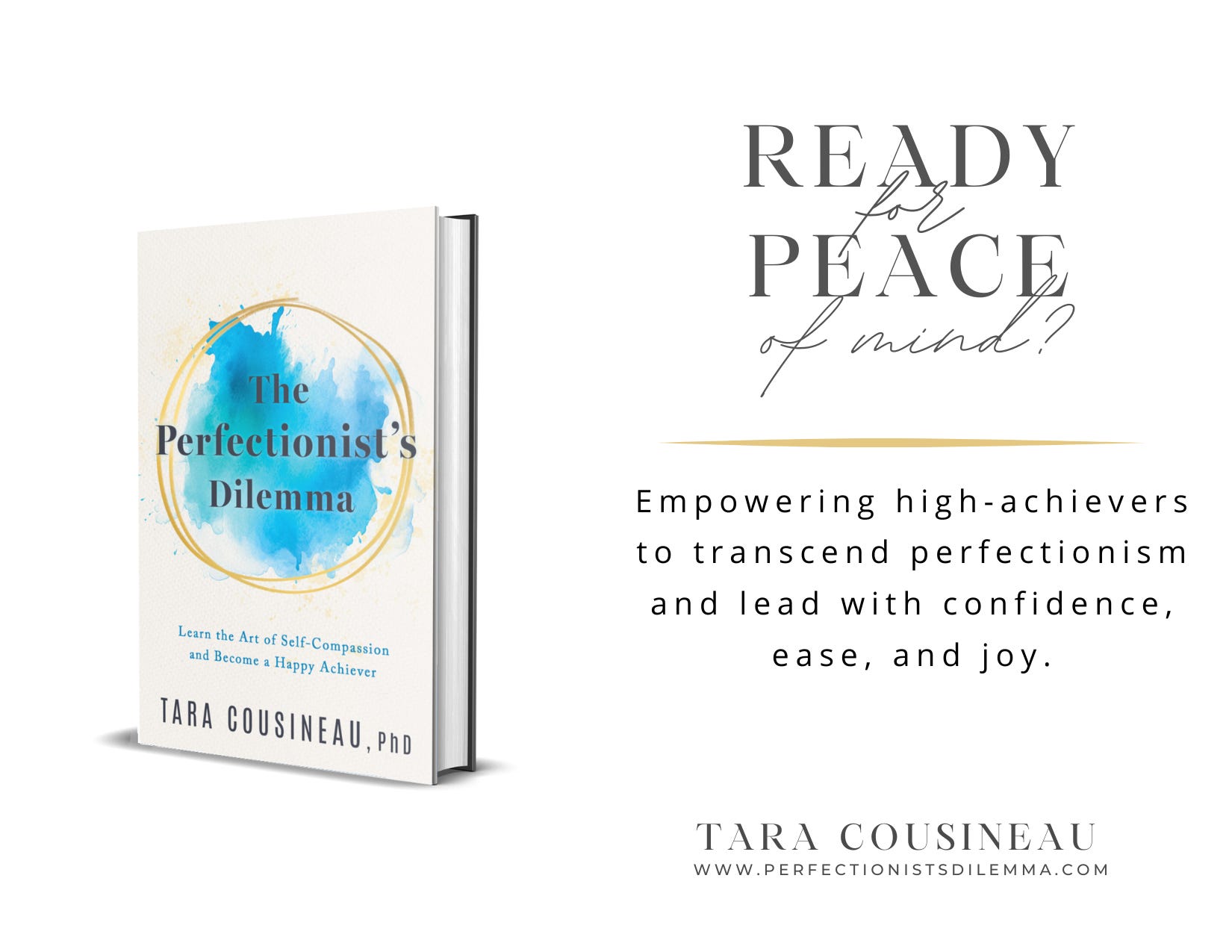
Tara Cousineau, The Perfectionist’s Dilemma: Learn The Art of Self-Compassion and Become Happy Achiever
Paul Gilbert, The Compassionate Mind
Stephen W. Porges and Deb Dana. Clinical Applications of the Polyvagal Theory: The Emergence of Polyvagal-Informed Therapies
Story of my life…until I chose to change it.
I spent years cultivating the Green Zone after a lifetime in Red and Blue.
Achievement to me = safety.
Because achievement was defined by Structure, and I thrive with Structure.
Post grad school (and two masters at the same time), I internally struggled in my jobs. I’d create the structures to support the work I was doing (efficiency!) and then spin aimlessly when I didn’t have Structure.
Now, I get to create beautiful Structure in my own life and work, one “brick” at a time, at the pace my nervous system can sustain and recover from.